
· 4 min read
How to Start a Pickleball Club in Canada: Courts, Equipment, Pricing, and Seasons
How to start a pickleball club in Canada: finding outdoor and indoor courts, converting a badminton gym, nets and balls, pricing drop-ins, and planning for winter.
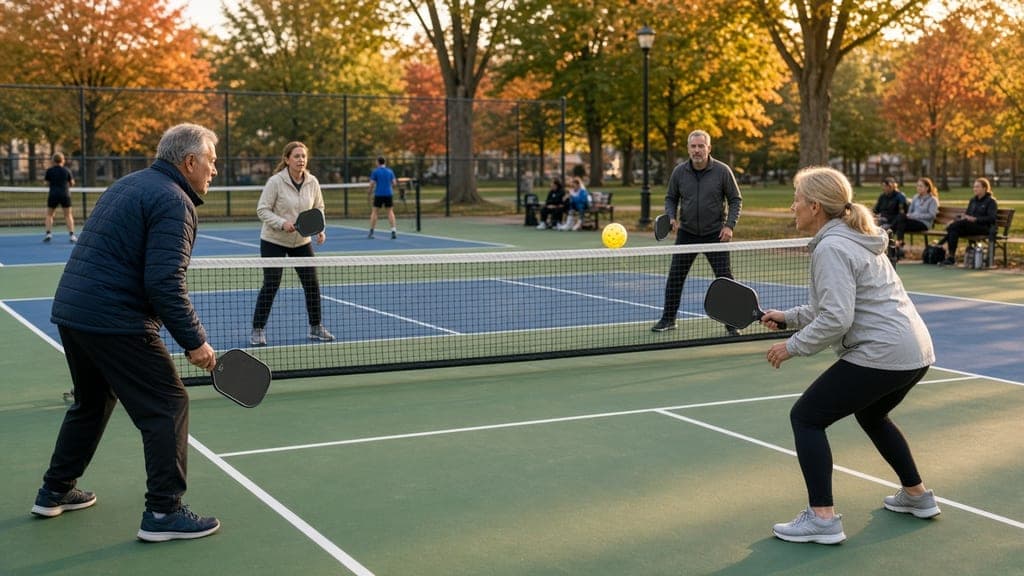
Pickleball has grown fast in Canada, and in many cities there are more players than organized places to play. That is the opening for a new club. The steps are close to starting a badminton club, with three big differences: outdoor courts, a different net, and a season that changes with the weather.
Decide who the club is for
Pickleball draws a wide range of ages and levels, from retirees to former tennis and badminton players. Pick your first audience: a beginner-friendly social night, an intermediate drop-in, or a competitive ladder. Many clubs use self-rated levels like 2.5, 3.0, 3.5, and 4.0 so players can find the right session.
Find courts: outdoor season
- Dedicated municipal pickleball courts. Some are first come, first served, and some can be booked. Ask your city's parks or recreation department whether community groups can book regular blocks of time.
- Tennis courts with pickleball lines. Many cities have added pickleball lines to tennis courts. Check the local rules on shared use and peak hours.
- Private tennis and racquet clubs. Some rent courts to outside groups, especially on weekday mornings.
Outdoor courts near homes can draw noise complaints, and some cities restrict hours on specific courts. Know the local rules before you put a regular session on a busy court.
Find courts: indoor season
In most of Canada, the outdoor season runs roughly from spring to mid-fall, and indoor play carries you through winter. Indoor options are the same as for badminton: school board community use permits, municipal recreation centres, universities, community halls, and private facilities. Apply for winter gym time in late summer, before your outdoor season ends.
Converting a badminton gym
A pickleball court is 20 by 44 feet, the same size as a badminton doubles court. That makes most gyms with badminton lines easy to convert. Use the badminton doubles outer lines, then tape the non-volley zone (the kitchen) 7 feet from the net on each side and a centre line. Ask the facility what tape they allow on the floor.
Nets, balls, and paddles
- Nets: a pickleball net is 36 inches high at the posts and 34 inches at the centre, lower than a badminton net. Portable pickleball net sets are the norm for indoor play. Badminton nets will not work.
- Balls: indoor and outdoor balls are different. Indoor balls are softer with larger holes; outdoor balls are harder with smaller holes for wind. Buy the right one for the season.
- Paddles: keep a few loaner paddles for newcomers. It removes the biggest barrier for someone who wants to try it once.
- Storage: you will need somewhere to keep nets between sessions. Ask the facility about storage before you buy.
Insurance
Facilities often ask for a certificate of liability insurance, the same as for any community group renting a gym. Check whether Pickleball Canada or your provincial pickleball association offers club affiliation with liability coverage, or ask an insurance broker about a policy for a recreational sports club.
Price your sessions
Indoor sessions carry gym rental, so price them like badminton: add the gym, balls, and insurance, divide by a realistic number of players, and round up. Indoor pickleball drop-ins in Canadian cities commonly cost somewhere around $8 to $15. Outdoor sessions on public courts can be cheaper or free, but charging a small fee for organized play, coaching, or equipment keeps registrations honest. See the guide to collecting club fees for payment options.
Run the rotation
The standard pickleball rotation is a paddle queue: players put their paddles in a rack or line, and the next four paddles take the next open court. Games to 11, win by 2, keep the queue moving. Cap at 5 to 6 players per court so nobody waits more than one game. The drop-in nights guide covers caps, waitlists, and no-shows in more detail.
Run beginner clinics
A one-hour clinic for new players is the best growth tool a pickleball club has. Teach the serve, the two-bounce rule, the kitchen, and scoring, then play short games. Most of your future regulars will come through a beginner session.
Plan the year
- Spring: book outdoor court blocks and announce the summer schedule.
- Summer: run outdoor sessions and clinics; apply for winter gym time.
- Fall: overlap outdoor and indoor for a few weeks so nobody loses their spot.
- Winter: indoor sessions, levelled nights, and a ladder or small tournament to keep people engaged.
HostMyClub lets you run outdoor and indoor sessions as separate recurring events under one club, with caps, waitlists, and payment at registration on each.